


BALI 2027
World Interfaith Meeting on Justice and Mercy
Spring 2027
in collaboration with the Dicastery for Interreligious Dialogue (Vatican)

The WIMJM (World Interreligious Meetings on Justice and Mercy) process aims to bring people together and encourage a culture of encounter and mercy on a global scale. The Bali Interreligious Meeting is in line with the Abu Dhabi Declaration (2019), which calls for dialogue based on the “pillars of justice and mercy”. The challenge is to draw on the richness of spiritual and religious traditions to promote human dignity and universal brotherhood.
To help you prepare for this event, and to meet your expectations as fully as possible, invites you to complete a questionnaire.
Program
Day 1
| 15h00 | Site 1 |
Welcome and registration of participants at the Catholic Center (Site 1) : Address: Jl. Rambutan No.27, Dangin Puri, Kec. Denpasar Tim, Kota DENPASAR, Bali 80232, Indonesia Tel. : +62 822-6625-9069 Déplacement vers la Cathédrale du Saint-Esprit de Denpasar. Indeed, most of the WIMJM 2027 meetings will take place in premises located under the Cathedral of the Holy Spirit (Roh Kudus) in Denpasar (Site 2): Address: Jl. Tukad Musi No.1, Renon, Denpasar Selatan, Kota DENPASAR, Bali 80235, Indonesia |
|---|---|---|
|
5:30 pm – 6:00 pm |
Site 2 |
A word of welcome |
|
6 p.m. – 8 p.m. |
Site 2 |
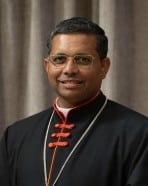
Official opening: Minister of Religious Affairs, Cardinal George Koovakad Other officials |
Day 2
| 7.30 a.m. - 8.00 a.m. | Site 2 | Registration of new participants (Cathedral) |
|---|---|---|
|
8:00 – 8:30 a.m. |
Site 2 |
Opening (Mgr S. San and P. P. Chocholski) |
|
8:30 a.m. – 10:00 a.m. |
Site 2 |
International speakers: Suddin (Hinduism, India) and Dr M. Hannase (Islam, Istiqlal, Jakarta) |
|
10h00 – 10h30 |
Site 2 |
Coffee break |
|
10:30 a.m. – 11:15 a.m. |
Site 2 |
International speakers: Mgr Felix Machado (FABC, Mumbai) & P. P. Chocholski (Catholicism, France) |
|
11:15 a.m. – 12:30 p.m. |
Site 2 |
Questions and answers |
|
12:30 pm – 2:30 pm |
Site 2 |
Lunch break |
|
2:30 – 4:30 pm |
Site 2 |
Testimonies from local communities Hindus (Bali), Protestants, Buddhists (Purmabudi), Confucians Moderator: P. Budi Purnom (KWI) |
|
4:30 pm – 5:30 pm |
Site 3 |
Bus transfer to Nusa Dua (site 3) |
|
5:30 pm – 6:30 pm |
Site 3 |
Meeting at Hindu Pura Presentation of Hinduism in Bali by Dr Mada Arke |
|
6:30 pm – 8:30 pm |
Site 3 |
Dinner and return to Denpasar |


Day 3
| 7.30 a.m. - 8.00 a.m. | Site 2 | Registration of new participants (Cathedral) |
|---|---|---|
|
8:00 – 8:30 a.m. |
Site 2 |
Opening prayers |
|
8:30 a.m. – 10:00 a.m. |
Site 2 |
International speakers: Protestantism (Dr Grace Moon CCA, Korea) & Judaism (Rabbi Haïm Bendao, France) |
|
10h00 – 10h30 |
Site 2 |
Coffee break |
|
10:30 a.m. – 11:15 a.m. |
Site 2 |
International Speakers: Buddhism (Master Chen Yen, Tzu Chi, Taiwan) |
|
11:15 a.m. – 12:30 p.m. |
Site 2 |
Questions and answers |
|
12:30 pm – 2:30 pm |
Site 2 |
Lunch break |
|
2:30 – 4:30 pm |
Site 2 |
Testimonies from local communities Brazil and Mali, Florida, Muslims in Europe, Sikh de Birmingham Moderator: P. Markus Solo (DID) |
|
5.30pm – 7pm |
Site 2 |
Meeting open to all at the Catholic Cathedral Inaya Wahid (Nahdlatul Ulama) P. Herman Babey (Denpasar) |


Day 4
| 7.30 a.m. - 8.00 a.m. | Site 2 | Registration of new participants (Cathedral) |
|---|---|---|
|
8:00 – 8:30 a.m. |
Site 2 |
Opening prayers |
|
8:30 a.m. – 10:00 a.m. |
Site 2 |
International speakers: Taoism (from Taiwan) & Islam (Mohammadya) |
|
10h00 – 10h30 |
Site 2 |
Coffee break |
|
10:30 a.m. – 11:15 a.m. |
Site 2 |
Mgr Paolo Martinelli (Catholic Bishop of the United Arab Emirates -Oman – Yemen) Amb. Dr. Khalid Al Ghaith (High Committee for Human Fraternity) |
|
11:15 a.m. – 12:30 p.m. |
Site 2 |
Questions and answers |
|
12:30 pm – 2:30 pm |
Site 2 |
Lunch break |
|
2:30 – 4:30 pm |
Site 4 |
Move to the Peace Monument |
|
5:30 pm – 8:30 pm |
Site 4 |
Bali Declaration Dinner and closing ceremony |


Program
Day 1
| 15h00 | Site 1 |
Welcome and registration of participants at the Catholic Center (Site 1) : Address: Jl. Rambutan No.27, Dangin Puri, Kec. Denpasar Tim, Kota DENPASAR, Bali 80232, Indonesia Tel. : +62 822-6625-9069 Déplacement vers la Cathédrale du Saint-Esprit de Denpasar. Indeed, most of the WIMJM 2027 meetings will take place in premises located under the Cathedral of the Holy Spirit (Roh Kudus) in Denpasar (Site 2): Address: Jl. Tukad Musi No.1, Renon, Denpasar Selatan, Kota DENPASAR, Bali 80235, Indonesia |
|---|---|---|
|
5:30 pm – 6:00 pm |
Site 2 |
A word of welcome |
|
6 p.m. – 8 p.m. |
Site 2 |
Official Opening: Minister of Religious Affairs, Cardinal George Koovakad |
Day 2
| 7.30 a.m. - 8.00 a.m. | Site 2 | Registration of new participants (Cathedral) |
|---|---|---|
|
8:00 – 8:30 a.m. |
Site 2 |
Opening (Mgr S. San and P. P. Chocholski) |
|
8:30 a.m. – 10:00 a.m. |
Site 2 |
International speakers: |
|
10h00 – 10h30 |
Site 2 |
Coffee break |
|
10:30 a.m. – 11:15 a.m. |
Site 2 |
International speakers: |
|
11:15 a.m. – 12:30 p.m. |
Site 2 |
Questions and answers |
|
12:30 pm – 2:30 pm |
Site 2 |
Lunch break |
|
2:30 – 4:30 pm |
Site 2 |
Testimonials from local communities |
|
4:30 pm – 5:30 pm |
Site 3 |
Bus transfer to Nusa Dua (site 3) |
|
5:30 pm – 6:30 pm |
Site 3 |
Meeting at Hindu Pura |
|
6:30 pm – 8:30 pm |
Site 3 |
Dinner and return to Denpasar |
Day 3
| 7.30 a.m. - 8.00 a.m. | Site 2 | Registration of new participants (Cathedral) |
|---|---|---|
|
8:00 – 8:30 a.m. |
Site 2 |
Opening prayers |
|
8:30 a.m. – 10:00 a.m. |
Site 2 |
International Speakers: |
|
10h00 – 10h30 |
Site 2 |
Coffee break |
|
10:30 a.m. – 11:15 a.m. |
Site 2 |
International Speakers: |
|
11:15 a.m. – 12:30 p.m. |
Site 2 |
Questions and answers |
|
12:30 pm – 2:30 pm |
Site 2 |
Lunch break |
|
2:30 – 4:30 pm |
Site 2 |
Testimonials from local communities: |
|
5.30pm – 7pm |
Site 2 |
Event open to all at the Inaya Wahid (Nahdlatul Ulama) Catholic Cathedral , Fr. Herman Babey (Denpasar) |
Day 4
| 7.30 a.m. - 8.00 a.m. | Site 2 | Registration of new participants (Cathedral) |
|---|---|---|
|
8:00 – 8:30 a.m. |
Site 2 |
Opening prayers |
|
8:30 a.m. – 10:00 a.m. |
Site 2 |
International speakers: |
|
10h00 – 10h30 |
Site 2 |
Coffee break |
|
10:30 a.m. – 11:15 a.m. |
Site 2 |
Mgr Paolo Martinelli (Catholic Bishop of the United Arab Emirates -Oman – Yemen) |
|
11:15 a.m. – 12:30 p.m. |
Site 2 |
Questions and answers |
|
12:30 pm – 2:30 pm |
Site 2 |
Lunch break |
|
2:30 – 4:30 pm |
Site 4 |
Move to the Peace Monument |
|
5:30 pm – 8:30 pm |
Site 4 |
Bali Declaration |
Justice and mercy together in our spiritual traditions
Justice and mercy are often treated as opposites. Yet across cultures, philosophies and spiritual traditions, they emerge as complementary forces for spreading peace. Justice guarantees fairness, responsibility and the protection of rights. Mercy brings proximity between the human and the divine, to people in need, for the restoration and care of human dignity. human dignity. Together, they form a creative creative, living and harmonious tension, capable of renewing relationships with God, with people and with the environment, strengthening human brotherhood and inspire concrete action in a fractured world.
About the world meeting
This World Interfaith Encounter brings together :
- religious leaders and believers,
- researchers and educators,
- social actors, jurists, artists, and political decision-makers,
- and all people of good will
to reflect, dialogue, pray and act together at the crossroads of Justice, Mercy and Human Fraternity.
The meeting will feature :
- interfaith dialogue and shared reflection,
- methodological workshops (research, training),
- cultural and artistic contributions,
- and concrete avenues for shared witness and action,
- with a final declaration.
Key questions to explore :
- How can justice remain firm without becoming inhuman?
- How can mercy be transformative and restorative without losing responsibility?
- How can spiritual and religious traditions contribute – together – to peace, reconciliation and social cohesion today?
Expected audience
- Religious and spiritual leaders
- Academics and researchers
- Educators and training managers
- Actors for social justice and peace
- Young leaders and emerging voices
- Institutions and organizations involved in dialogue
- And anyone of good will…
WIMJM 2027 venues :
SITE 1 Welcome and registration of participants (Day1 ) at the Catholic Centre :
Address: Jl. Rambutan No.27, Dangin Puri, Kec. Denpasar Tim,
Kota DENPASAR, Bali 80232, Indonesia
Tel. : +62 822-6625-9069
SITE 2: Afterwards, most of the WIMJM 2027 meetings will take place in the large premises located under the Cathedral of the Holy Spirit (Roh Kudus) in Denpasar :
Address: Jl. Tukad Musi No.1, Renon, Denpasar Selatan,
Kota DENPASAR, Bali 80235, Indonesia
Registrations
Pre-registration:
We invite you to pre-register now to guarantee your place and to receive all information in priority.
Registration: Coming soon
Registration fee: €90 (about $100) per person per person for :
- Participation in 4-day conferences
Package price of €150 (approximately $170) per person for :
- 7 meals (lunches and dinners) and 6 snacks over 4 days
- Daily return transport between your hotel and the Cathedral (regular shuttles)
- Bottles of water (as much as you like) during meetings
- Taxes and services
Reservations and hotel costs are your responsibility. However, you can benefit from preferential rates once you have registered for WIMJM 2027. A code will be sent to you by e-mail.
List of proposed hotels:
Please note: before booking your plane ticket, don’t forget to apply for an e-visa on the website evisa.imigrasi.go.id
Visio or Replay package for all conferences:
€50 (approx. $60)
Frequently asked questions
How do I get to Bali?
Contact your government website.
- For France : diplomatie.gouv.fr
Question?
The answer!
Question?
The answer!
Context
The challenges of interfaith dialogue in Indonesia
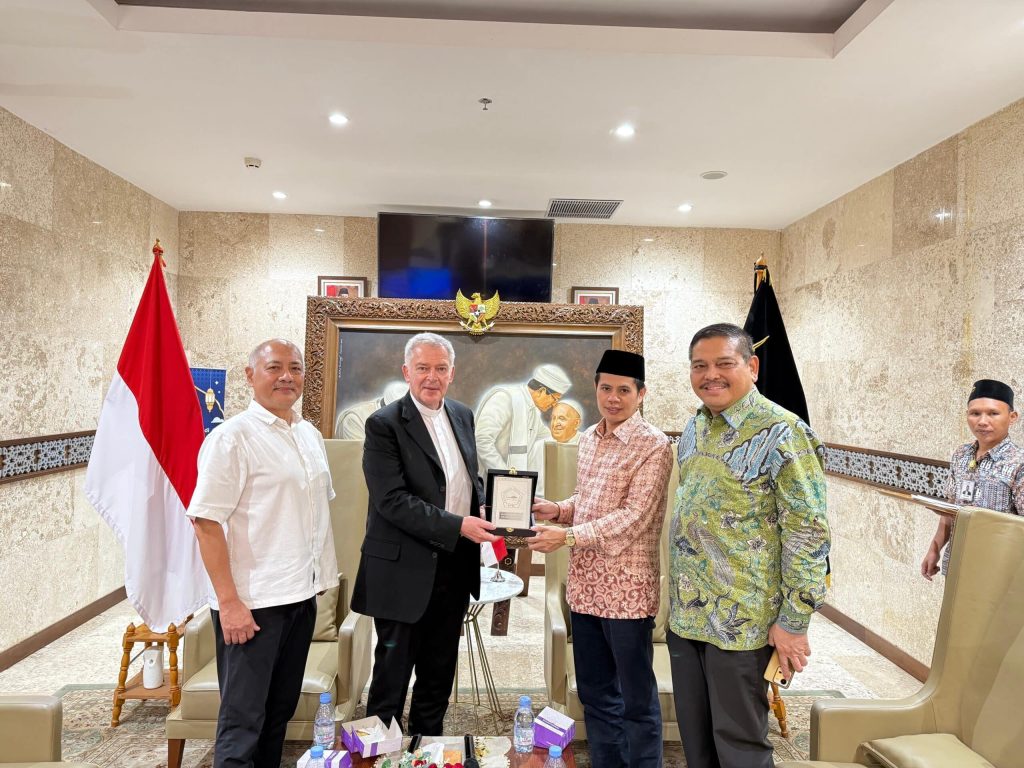
Interfaith dialogue plays a crucial role in promoting peace and understanding in Asia, a continent marked by its rich mosaic of religions, cultures and traditions. From bustling metropolises to rural communities in Indonesia, interreligious dialogue forges links between diverse communities. Mercy, a theme common to most religions, is the foundation of these dialogues, fostering mutual respect, reconciliation and a shared humanity. This short introductory text explores the importance of mercy in interfaith dialogue in the context of Asian society and the unique characteristics of Indonesians. It highlights its transformative impact on communities, helping to achieve the desired goal of peace, love and collaboration between different religions.
Understanding interfaith dialogue in Indonesia
The Indonesian Constitution
Everyone has the freedom to practice their religion and to worship according to their religion and beliefs (1945 Constitution, article 29).
Asia's triple dialogue
Asia’s “triple interfaith dialogue” generally refers to exchanges and collaborative initiatives between representatives of Asia’s three main religious traditions: Buddhism, Hinduism and Islam. These dialogues aim to foster mutual understanding, respect and cooperation, while addressing common challenges such as social harmony, environmental concerns and peace-building. Deeply rooted in Asian history and culture, these three religious traditions share common values while offering unique perspectives on spirituality, ethics and the human condition. Harmonious relations have developed between the peoples of Asia. Indeed, solidarity and fraternity have become essential values for Asian families, and it’s important to note that pluralism characterizes Asian society, whether in the economic, political or social spheres.
Asia is a melting pot of cultures and religions. Other religions are also present, such as Christianity (Catholic and Protestant) and local religions. The Catholic Church, faithful to its mission of building peace and promoting mutual respect between different faiths, plays an essential role in inter-religious dialogue in Asia.
Interestingly, some Asian societies can be described as a hotbed of cultural and religious pluralism. Many people convert from one religion to another, such as Hinduism and Islam, or Catholicism and Islam. Indeed, many priests, brothers and nuns, whose parents were not Catholic, live under the same roof in perfect harmony. In this way, they become an example of interfaith dialogue within their own families.
Certainly, misunderstandings can arise within a multi-faith household. However, such families foster deeper mutual understanding and respect, and can develop a more inclusive worldview, valuing the commonalities between religions while respecting differences in everyday life. In practical terms, these families are often microcosms of inter-religious harmony, demonstrating that mutual respect and love can transcend religious boundaries and be rooted in mercy. This would be the best pastoral witness to the Good News, a witness that takes root in our very homes, as expressed by the 1974 assembly of the Federation of Asian Bishops’ Conferences (FABC) in Taipei. The importance of dialogue in the pastoral activities of the Catholic Church in Asia was underlined, with the FABC defining three axes of dialogue: dialogue with cultures, dialogue with religions, and dialogue with the poor. These dialogues are aimed at social justice, unity and peace between peoples and religions. This three-way dialogue approach, as the pastoral care of the Catholic Church in Asia, should undoubtedly be the cornerstone of relations between people of different religions, cultures and nationalities.
Interfaith dialogue in Indonesia
Indonesia is known as the world’s largest of Muslims and a dynamic center of interfaith dialogue. The country’s rich religious mosaic – including Islam, Hinduism, Buddhism, Christianity and indigenous beliefs – presents both opportunities and challenges for fostering interfaith harmony. Indonesians live in a religious pluralism where Islam, Christianity, Hinduism, Buddhism and Confucianism coexist. There are also local religions such as Parmalim in North Sumatra province, Sunda Wiwitan in Banten province and Marapu on the island of Sumba. The majority religion is Islam (87.06%), followed by Christianity (10.47%); then Hinduism (1.68%), Buddhism (0.71%), Confucianism (0.03%), and finally traditional or other religions (0.05%).
In the face of religious pluralism, the Indonesian government has taken proactive steps to promote interfaith harmony, notably through institutions such as the Ministry of Religious Affairs and the establishment of interfaith forums, such as the Indonesian Interfaith Network (Jaringan Antar Iman Indonesia). These initiatives aim to ease tensions and encourage cooperation between religious groups.
For example, the Indonesian government has built a tunnel linking the Istiqlal Mosque (the country’s largest mosque) and Jakarta Cathedral. This tunnel has become a symbol of the “of the “authentic and profound relationship of brotherhood in mercy between people of different religions, which in Indonesian stands for “Terowongan Silaturahim”. Terowongan Silaturahim “. It was inaugurated on September 6, 2024 by Grand Imam Nasaruddin Umar and Pope Francis during his visit to Indonesia.
The fundamental philosophy of Indonesia is called Pancasila. It emphasizes belief in one God, humanity, national unity, democracy and social justice for all Indonesians. This framework promotes religious tolerance and mutual respect, and serves as a basis for interfaith dialogue.
Concerned with promoting harmonious relations, tolerance and mutual respect, the Catholic Church in Indonesia is taking proactive measures and has become a key player in inter-religious dialogue, drawing on its commitment to social harmony and human dignity, as well as on mercy as the foundation of its collaboration with other religions.
As part of the actions undertaken, Indonesia’s 38 dioceses, with a total population of some 8 million faithful, wish to live out the Gospel message and Church documents relating to inter-religious dialogue and the ecumenical movement within their respective dioceses, in accordance with their pastoral program, based on mercy and compassion. In addition, each diocese has set up a commission for interreligious dialogue, as mandated by the Indonesian Bishops’ Conference (KWI).
All constituted commissions, whether at diocesan or KWI level, should take the initiative in creating interreligious dialogue programs by communicating with other religious leaders in the country. In addition, the Catholic Church must actively participate and collaborate closely with government programs in order to concretize interreligious dialogue at various levels. The KWI sees this approach as an integral part of Catholic identity and characteristics, rooted in the spirit of the Gospel, where mercy is at the heart of dialogue. Thus, the dialogue of life between peoples, academic dialogue, whether spiritual or theological, and cooperation in networking charitable actions for people affected by natural disasters will be good examples of the Church’s collaboration with other religions and government.
Mercy, therefore, is at the heart of our interreligious dialogue. certainly the central theme of many religious traditions, including Christianity and Islam, which will undoubtedly play a decisive role in inter-religious dialogue in Asia and Indonesia. This shared value lays the foundations for mutual respect and cooperation between different religious communities, enabling everyone to feel God’s mercy, ever present in visit and expression of our fraternity. God’s mercy should become the source of tolerance and brotherhood in Indonesia.
Asia’s triple interfaith dialogue should be a dynamic initiative aimed at building peaceful, collaborative and harmonious relationships between people of different backgrounds. By building on the values shared by different religions, addressing common challenges and fostering sincere respect, Buddhism, Hinduism and Islam can join forces to become builders of peace, mercy and compassion in our own communities and countries. The active role of the Catholic Church in facilitating and participating in these dialogues further enriches the process, testifying to its commitment to unity in diversity, in this wounded world, in order to achieve the ideal of a peaceful and harmonious life for all humanity.
Hoping and praying that efforts continue, this interfaith dialogue could serve as a model for global interfaith collaboration, inspiring people around the world to celebrate their common humanity while honoring their unique traditions and cultures with humility, collaboration and respect for all humanity.
Long-term project and process
In order to foster a global culture of unity, compassion and understanding, inspired by Pope Francis’ call for an interreligious dialogue centered on the interplay between justice and mercythe WIMJM 2026 Bali initiative initiative seeks to promote human dignity and brotherhood by embracing the rich diversity of religious traditions, based on mutual respect, collaboration and a shared commitment to the common good.
Rooted in the teachings of Nostra Aetateour vision highlights the articulation of justice and mercy as complementary forces that guide humanity towards reconciliation and solidarity. Justice ensures fairness and accountability, while mercy transforms relationships through forgiveness and compassion, reflecting the sacred dignity inherent in every person.
Through this initiative, we wish to facilitate the role of the Catholic Church in building bridges between religions, fostering fraternity through the witness of divine mercy. Together, we envision a world where justice and mercy harmonize to overcome divisions, alleviate suffering and inspire acts of charity, charting a common path towards peace, hope and fulfillment for all.
This meeting in Indonesia is part of the Abu Dhabi and Jakarta Declarations and focuses on the theme: Justice and mercy, hope for human dignity and fraternity.
Participants will include Muslims, Taoists, Hindus, Buddhists, Confucians, Jews, Christians and people of other faiths. The aim is to express, through their respective religious doctrines, the relational tension between justice and mercy. The document ” Celebrating Mercy with Believers of Other Religions ” (2016) published by the Dicastery for Interreligious Dialogue, will be a valuable resource.
The ultimate aim is to generate regional and local meetings around the world, starting from this global meeting in Indonesia, with the intention of establishing regular global gatherings on these topics every three years. A scientific committee will contribute to the development of this network, striving to reach outlying populations through cultural centers and multi-religious witnesses to mercy.e.
The question is to find the way to enrich each other’s experiences of mercy. This means listening with an open heart, interpreting the symbols of mercy of other religious traditions, and nourishing ourselves daily with the waters of mercy that flow from our encounters.
Preparing for the event
- Medan
February 2016
Appeal by the Archbishop of Medan, Mgr. Anicetus Sinagafor an interfaith meeting in Indonesia
- Abu Dhabi
February 19, 2025
Meeting with the High Committee for Human Fraternity
- Rome
April 11, 2025
Meeting with the Dicastery for Interreligious Dialogue concerning the preparation of the WIMJM 2027 interreligious meeting in Indonesia
- Jakarta
June 10, 2025
Working meeting with the President of the Indonesian Bishops’ Conference (KWI),
Bishop Antonius Subianto
- Jakarta
June 11, 2025
Meet Inaya Wahid, influencer for the Indonesian network Nahdlatul Ulama
- Jakarta
June 13, 2025
Meeting with Dr Mulawarne Hannase, Deputy Grand Imam of the Istiqlal Grand Mosque in Jakarta
- Bombay
June 15, 2025
Working meeting with Bishop Felix Machado (FABC – Federation of Asian Bishops’ Conferences), responsible for interreligious dialogue in Asia.
- Rome
October 30, 2025
Meeting with the Dicastery for Interreligious Dialogue on preparations for WIMJM 2027 – “World Interreligious Meeting on Justice and Mercy” in Bali
- Denpasar
December 9, 2025
Meeting with the Balinese Committee for Interreligious Dialogue
Getting ready
To help us prepare thoroughly for this meeting—and to enable us to tailor the event as closely as possible to your expectations—we would appreciate it if you could take a few minutes to complete the questionnaire below. Your participation in this questionnaire is entirely optional, but your input is invaluable to us as we prepare for the event. You are free to skip any questions that do not apply to you. You can complete it in several steps, provided you click the button at the bottom of each page to save your responses. The information collected is strictly confidential and processed in accordance with the GDPR. It will be used exclusively for the organization of this event.